LMS Migration Guide

LMS Migration minefield or smooth transition?
For many organisations, outdated learning platforms have become a barrier to growth. Whether it’s clunky technology, low learner engagement, poor reporting, or the inability to integrate with other business tools, the frustrations are real. The promise of a modern, flexible LMS is appealing, but too often the thought of migration feels overwhelming.
Concerns about losing valuable learning data, disrupting day-to-day training, or facing technical roadblocks can make it feel safer to stay put, even when the system is holding you back. You’re not alone. Many businesses feel “trapped” by their current LMS, knowing it isn’t fit for the future but unsure how to make the change without unnecessary risk or stress.
This is exactly where Cortexa comes in. We specialise in helping organisations navigate LMS migration with confidence, minimising disruption, protecting your data, and ensuring a smooth transition. Our approach is hands-on and collaborative, giving you the reassurance that your migration isn’t just a technical shift, but a chance to unlock new potential, boost engagement, and deliver lasting value for your learners and your organisation.
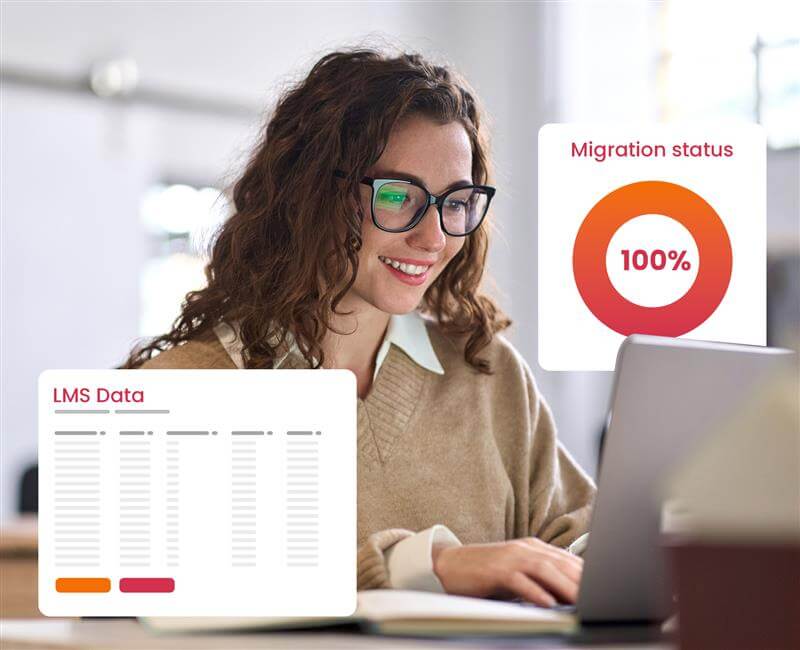
How we work with you throughout every phase.
Migrating an LMS to a new platform and provider can feel daunting, but it’s just about breaking it into clear, manageable stages. We know that every migration is slightly different, but experience has shown that a structured approach works every time.
Key migration stages:
1. Discovery & Planning – we consult with you to establish
- Your goals: why you’re moving and what success looks like.
- Audit your current LMS: content, user data, integrations, reporting.
- Engage stakeholders to capture needs and priorities.
- Build a migration roadmap and timeline.
2. Data & Content Audit – we’ll support you on
- Deciding what to keep, update, or retire (courses, resources, assessments).
- Reviewing data (user profiles, learning history, compliance records).
- Identify gaps where new content or functionality is needed.
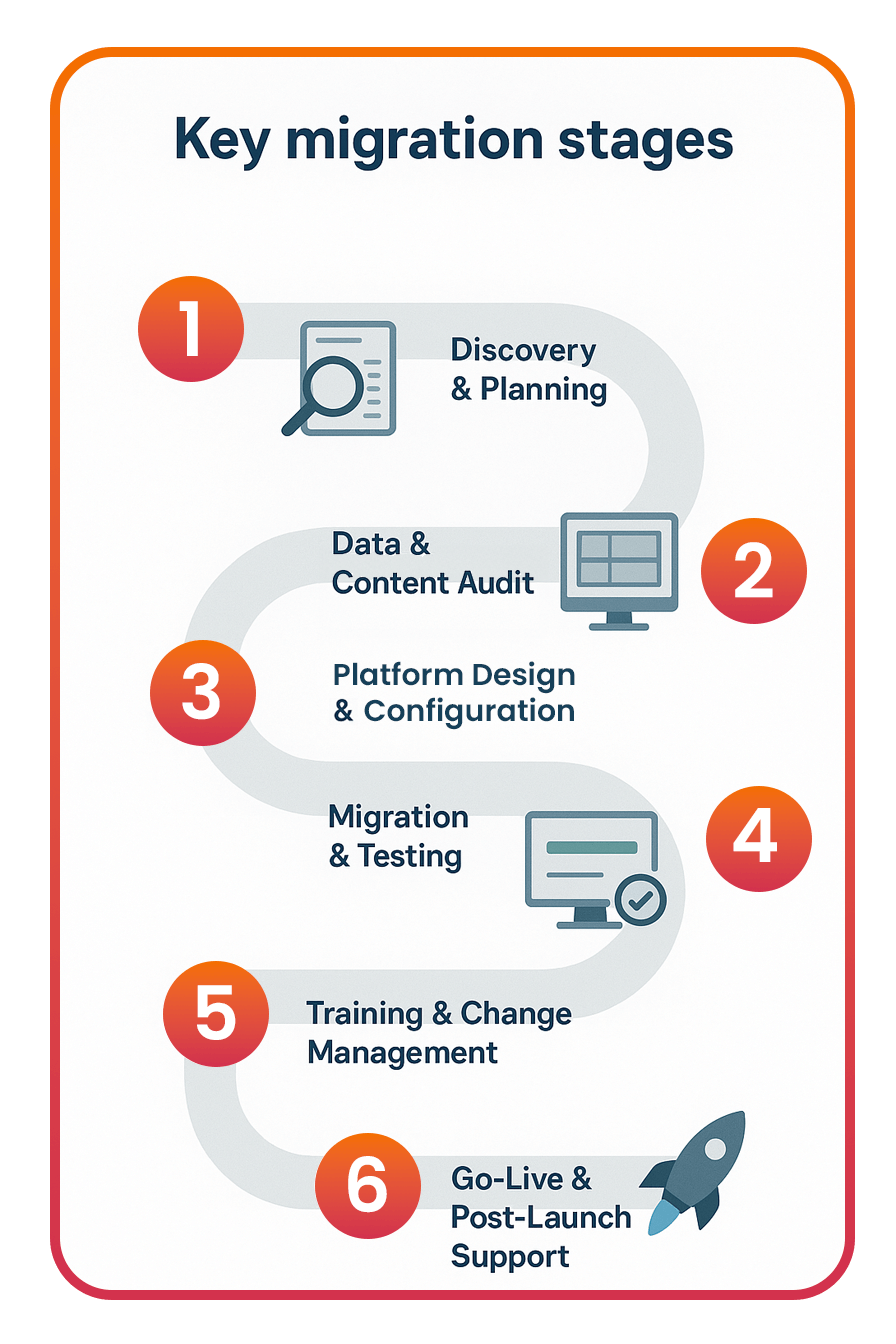
3. Platform Design & Configuration – we’ll consult and guide
- Configure the new LMS structure (hierarchies, roles, permissions).
- Set up branding, user journeys, and workflows.
- Map integrations with HR systems, CRMs, or authentication tools.
4. Migration & Testing – test under controlled conditions
- Transfer courses, resources, and user data to the new LMS.
- Validate migrated content and ensure reporting accuracy.
- Run sandbox testing with key users to check usability and fix issues.
5. Training & Change Management – immediate fulfilment & phased expansion
- Train admins, managers, and learners on the new system.
- Provide guides, online training resources and FAQs.
- Communicate the benefits clearly to encourage engagement.
- Phase training, adoption and features to fit business needs.
6. Go-Live & Post-Launch Support – hands on support with best practice advice
- Launch in phases (e.g., pilot group, then wider rollout).
- Monitor performance and learner feedback.
- Lean on provider support for refinements and troubleshooting.
- Schedule regular reviews to ensure ongoing optimisation.